

‘a visually stunning, heart stopping, scary yet clever theatrical production’
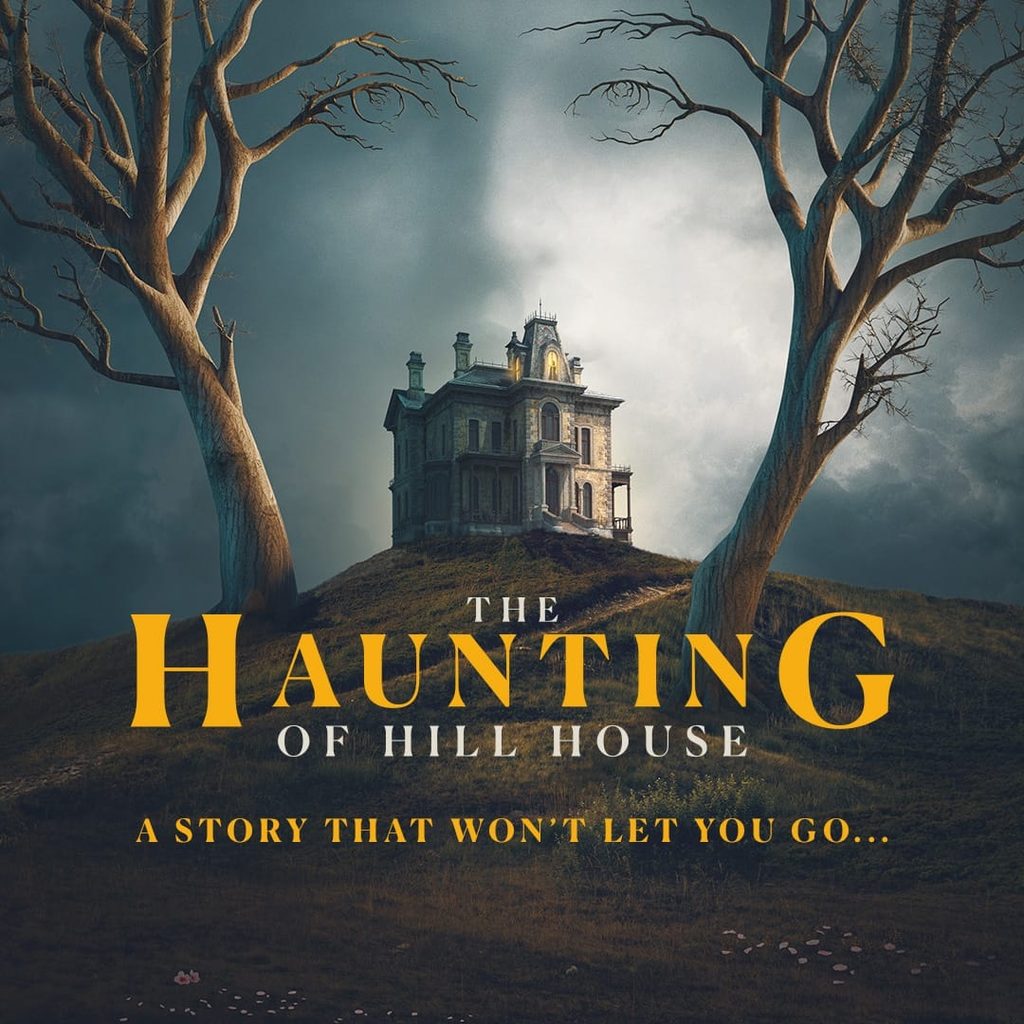
Based on Shirley Jackson’s renowned novel, The Haunting of Hill House arrives at Liverpool Playhouse in a production that combines psychological torment, supernatural presence and some impressive technical wizardry. Adapted for the stage by Stef Smith and directed by Martin Constantine, this is a production that sets out to unsettle its audience, blurring the lines between reality and the beyond.
The story follows Dr Montague, and a selected group of individuals (who all have their own paranormal back stories) coming together to investigate the history and stories of Hill House. What begins as an investigation into the supernatural soon develops into something much darker and sinister.
The cast features some strong individual performances, with Clancy Ryan as Eleanor particularly central to the production. Eleanor is a complicated character, vulnerable, lonely and desperate to find somewhere she belongs. Ryan demonstrates well her growing psychological distress throughout her stay, allowing the audience to witness her gradual unravelling. Sophie Lenglinger brings a confident, flirtatious and playful energy to Theodora. She provides an interesting contrast to Eleanor. Robin Morrissey plays Luke, the heir to Hill House, bringing a mixture of charm, scepticism and self-importance.
Jasper Britton gives Dr Montague an authoritative presence, a good leader and a trusted stable presence in such an ambiguous environment. Jemma Churchill as Mrs Montague adds another dimension to the story, strong, enthusiastic and straight talking, a contrast to Mr Montague. They work well as a duo. Finally, Sian Howard’s Mrs Dudley has an unusual manner, straight to the point and with an edge which keeps the audience guessing about her character throughout.
Ti Green’s set design is the most powerful element to this production. The house is presented as grand, imposing and showing its aging in parts, immediately establishing the gothic atmosphere needed for the story. The architectural features, doorways and panels create opportunities for shadows, silhouettes and unexpected appearances. The set itself almost becomes another character, with its structure and appearance constantly contributing to the sense that something is not quite right. With moving and transforming panels to seamlessly change scenes and provide some clever and creepy magical moments, an amazingly sophisticated set. Combine the set with the use of projections by Duncan McLean and this adds another layer to the design, allowing the environment to change and become increasingly disorientating. There is an impressive correlation between the physical scenery and the visual effects, creating the impression that the building itself is alive and twisting around its inhabitants.
The costumes (Ti Green) help establish the era and setting. Their individual costumes give the characters a recognisable styling which helps distinguish the different personalities, particularly when contrasting Eleanor’s more reserved appearance with Theodora’s bolder, more sassy character.
Chris Davey’s lighting design is one of the production’s technically sound elements. Lighting is absolutely essential to making any haunted-house story work; however, this element is heightened within the theatre. Used to demonstrate shadows, ghostly movement and sudden changes in intensity thus setting an atmosphere creating uncertainty about what the audience is seeing. In contrast, darkness becomes an important theatrical device in its own right. Enabling the audience to use their own imagination and also providing the much-needed breathing space for technical wizardry to happen. Darkness lets the audience feel that anticipation for what might appear.
Set, lighting and visuals are all exceptionally strong in this production and they are blended superbly with Johnny Edwards’ sound design and Harry Blake’s original composition make a considerable contribution to the atmosphere.
The soundscape is unsettling, aggressive and deliberately uncomfortable. Sudden noises, eerie effects, heightened sound effects to magnify everyday objects all fuse together to keep the audience on the edge of their seat. The music works alongside the sound effects to build a sense of impending danger. The sound team clearly understand how important audio is to create theatrical suspense and psychological chaos.
With so much happening technically, there is a question of whether some of the effects occasionally overshadow the storytelling. The shock factor, tension and technology are certainly the strongest components of this production and personally I found myself longing for something to happen to move the story along, more so in the first half, rather than just the noises, bangs and theatrical scare tactics.
Nevertheless, this is an entertaining and visually impressive production. A technically ambitious production which succeeds in its goal. A reminder of the unpredictability of live performance, combined with the latest clever illusions, technology and minds to enrapture an audience in this spiral of terror.
A combination of psychological torment, visually stunning technical wizardry and heart stopping scares. What more could you ask for?
Reviewer: Steph Wiswall
Date: 3rd November 2026
Star Rating: FOUR