

‘has the potential to positively inform an audience’
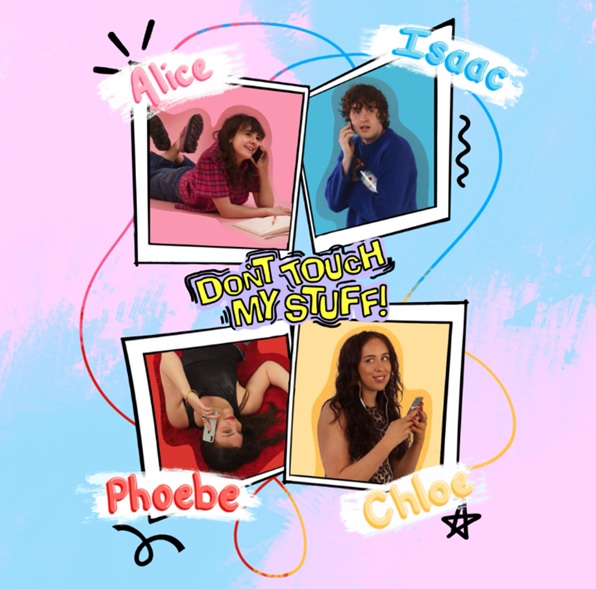
Writer and director Francesca Hill’s semi-autobiographical coming of age tale serves up some interesting parts but not enough to provide a satisfying whole.
Alice (Esmé White) and Isaac (Tommy Long) are siblings whose bedrooms in the family home are separated by a very thin wall. As Alice leaves for university, childhood bickering turns into something far more complicated as their respective relationships with partners Phoebe (Ella Niblett) and Chloe (Hill) are explored along with questionable life choices and identity crises amid the chaos of sexuality, mental health, and family expectations.
With support from producer Lola Miles, the production is set entirely between two bedrooms, whilst the moveable beds and back walls allow us to move between scenes across a six-year period, although these switches along with musical accompaniment need to be quicker and crisper to work effectively. With many of the scenes invariably too short, the subsequent stage adjustment becomes more of a disruption to the momentum of the piece itself.
The old adage of playwriting is to show, not tell, so it is unfortunate that the scenes here are far too dialogue heavy, typically wrapped around a phone or face-time call, and the resultant action static with each character either sat on or stood by their respective bed.
There are some important issues hinted at but never really explored in sufficient depth as we remain mired in very recognisable sibling quarrels, but which felt more personal to Hill and don’t really add anything as they become somewhat circular and repetitive.
There are some interesting parallels between Alice and Isaac’s journeys but without the necessary tension there is little left to resolve, and ultimately the two principal characters are not particularly likeable as they remain caught up in their own self-interests right to the end.
White and Long both perform strongly and demonstrate good stage presence, with White capturing the precociousness of Alice perfectly whilst Long reflected Isaac’s ennui, although in both instances, I’m not sure that was the intention of the writing as neither evoke any real sympathy despite their growing pains.
Hill and Niblett provide the necessary support as the respective love interests but without sufficient material to give their characters the necessary depth. Ultimately coming in at ninety minutes without an interval, there is not enough action to sustain interest and the musical scene changes began to feel more like filler.
I’ve written at length about the importance of healthy creative friction between writer, director, and actors that benefits the development of a production, and I can’t help but feel that here, with Hill having taken on all three mantles, it has somewhat stifled that process: Hill has been the instigator of an impressive scratch theatre showcase in Liverpool so I don’t think I’m saying anything she doesn’t already know: sometimes as a writer it’s about knowing when to let go and trust the process.
Whilst I’m not entirely convinced about the overriding story arc which seems somewhat self-indulgent, many of the issues touched upon do deserve further exploration, and I would encourage Hill, as a writer, to take a step back and workshop these with a separate director and a cast, because in tackling these more fully, the piece has the potential to positively inform an audience.
Review Date: 25th June 2026
Star Rating: TWO