

‘a fascinating piece of social history’
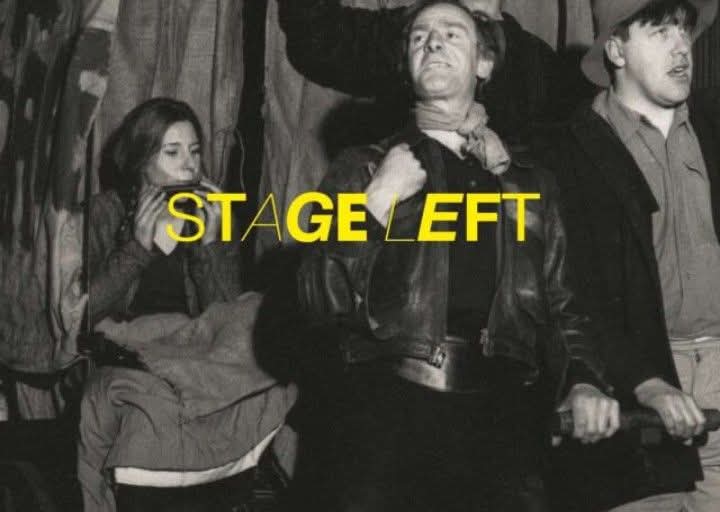
Artistic Director Elinor Randle, with the support of Eimar Holly, takes us on a journey through protest, passion, and creativity, as Unity Theatre celebrates a century of radical theatre in Liverpool.
Split into two uneven halves, the opening part at just over an hour provides a snapshot journey from the 1930’s through to the early 1980’s with a focus on what was originally known as the Merseyside Left Theatre.
An ensemble – Rchel Barry, Stephanie Greer, Emma Hirons, Aidan Maj, Phil Perez – take us through some re-enactment of abstracts from plays which paralleled periods of major social upheaval in both England and abroad, with support from performers from Collective Encounters Women In Action group.
There was good use of projection to set scene and context from Noel Jones with added musical direction, composition, and sound design from Patrick Dineen that embellished the mood and moments as the evening progressed. Dineen has his own deserved place in the history of this theatre, and it felt a little like coming full circle.
Xenia Bayer kept the action appropriately lit as through re-enaction of plays we travelled from Spain to America whilst Barry Han’s editing of the historic voice over reinforced the connection between now and the past whilst Gillian Ashcroft Smith ensured the quick-change costumes were appropriate to each period.
Performances were strong, albeit with some occasional shouty over-acting that undermined the narrative, with strongly orchestrated choreography, timely use of songs, and good audience engagement throughout.
The much shorter second half focused on the establishment of a permanent home for the theatre in the old synagogue on Hope Place and its subsequent redevelopments to its current form, much of which happened under the watch of the late Graeme Phillips who was Artistic Director from 1982 through to 2015. This was a fascinating piece of social history with again good use of projection to showcase programmes of the period reflecting a niche body of work and voice over recollections that really got the heart of what the theatre meant to people rather than just the bricks and mortar.
There can be a risk with productions of this nature that they become a little too rose-tinted navel gazing, but Randle and Holly kept the balance just about on the right side for what was always going to be an appreciative audience.
There were two key takeaways for me.
Firstly, the potential to showcase in full some of the plays that were abstracted tonight as part of a wider retrospective.
The Good from 1955 offered the simplest and most succinct explanation of labour, industrial capitalism, and the mechanisation of society, I have ever seen, and which sadly still remains relevant today, whilst René de Obaldia’s absurdist one-act play, Edward and Agrippina, from 1973, drew immediate laughter suggesting it could comfortably make a return.
Secondly was the fact that the theatre was originally part of a wider community hub with the space available for everyone to use, and whilst its subsequent evolution to prominence in its fixed home on Hope Place saw it focus on specific community groups, it was still accommodating wider use from within and without the region and supporting the development of work. Although many of these principles pleasingly remain today, it is worth considering how community has changed over time, the necessary appeal of a wider audience, and the opportunity to see some different faces on the stage: there are several companies keen to use one or both of the two performance spaces which can only be a good thing as Unity Theatre looks forward to its next one hundred years.
Stage Left performs through to Saturday 6th June with matinee and evening performances. Further details and booking https://www.unitytheatreliverpool.co.uk/whats-on/stage-left/
Review Date: 4th June 2026
Star Rating: THREE