

‘Thought Provoking Local Theatre’
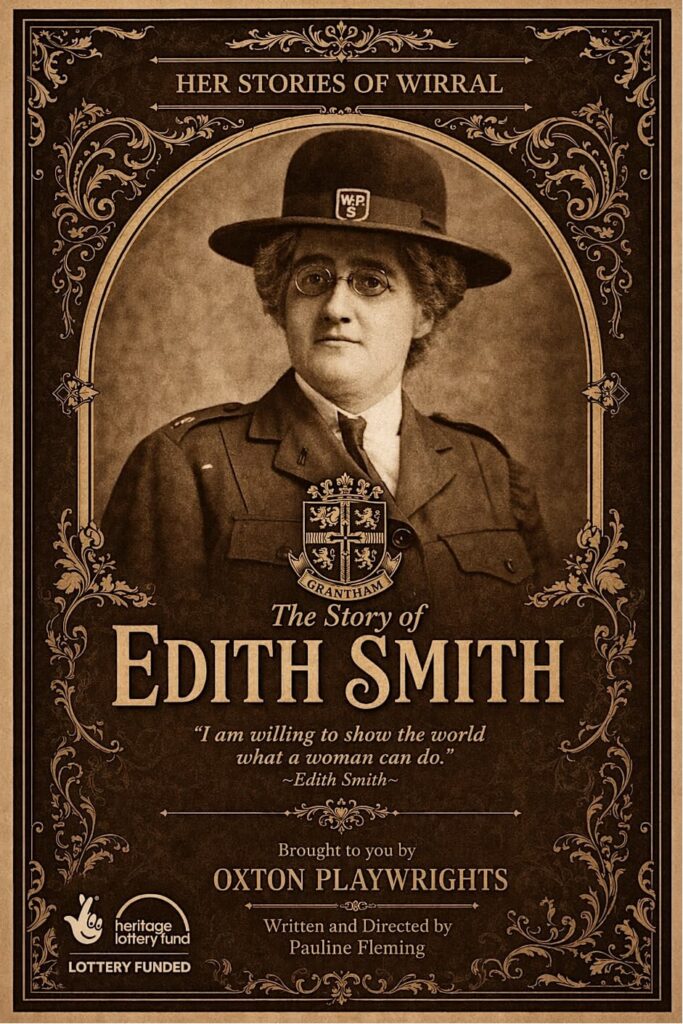
Oxton Playwrights CIC are a Mother and Daughter duo Pauline Fleming and Cornelia Nelson. The Story of Edith Smith was written and directed by Pauline Fleming and co-produced by Cornelia Nelson. Oxton Playwrights bring local history to life through theatre and community storytelling. The elegant setting of Callister Gardens fits in well with the era of the play.
The Story of Edith Smith celebrates the life of Oxton born Edith Smith, Britain’s first female Police Constable with full powers of arrest. The production follows Edith Smith’s story from local woman to national figure who coped with responsibility, motherhood and with becoming a widow.
Edith Smith (Laura Nock) works in her parents shop and narrates her story through letters to her sister Minnie. Edith meets and falls in love with William Smith (John Garfield-Roberts) who she marries and they go onto have four children. They run the local Post Office in Oxton but in 1907 William tragically dies leaving Edith at the age of 31 a widow with four children. There is real chemistry between Nock and Garfield-Roberts which adds to the telling of the marriage story and the tragedy of William’s death. Daniel Taylor, Stephanie Heywood and Izzy Campbell took on multiple roles throughout the performance.
After William’s death Edith then goes on to train as a midwife in London and her children are dispersed across the country in different schools and her son is left in an orphanage. Whilst times were very different socially for women I felt it could have been explained in greater depth what made Edith arrive at the decision to make such an emotional change to her life. Was the death of her husband the tipping point at which she felt she could not cope?
As war broke out in 1914 women became involved in Policing as volunteers and received basic training. Edith was recruited and was based in Grantham working with and offering support to vulnerable young women. In December 1915 Edith became the first full WPC receiving her warrant card which gave her the powers to arrest. She also travelled around the country promoting the work that women could do in the Police Force. Due to ill health she later returned to nursing and moved to Runcorn in Cheshire.
Some of the more modern songs used in the performance did not really fit with the era but I could tell they had been chosen to enhance the feelings being portrayed in the scene.
There was a simple but effective stage setting which made good use of the surroundings and before the performance live music by Cello Duo added to the surroundings and was a lovely touch.
This original performance brought to life Edith Smith’s little known story and how she helped change women’s role in society.
I was taken by surprise by the ending and although Edith Smith achieved so much in her life and challenged what women could do, was she truly happy?
Upcoming performances:
Unity Theatre Liverpool 16th September
Shakespeare North Playhouse 18th September
Review date: 13th September 2026
Star Rating: THREE